Stem Cell Therapy in Orthopedics: Gentle Treatment for Knee Osteoarthritis & More

YOU ARE HERE Home » Conservative » Stem cell therapy

Stem cell therapy

Stem cell therapy is being discussed in orthopedics and trauma surgery as an approach within regenerative medicine. Stem cell treatment is considered particularly for osteoarthritis, knee osteoarthritis, meniscus tears, and other degenerative orthopedic conditions. Many patients today actively seek information about experiences with stem cell therapy when conservative measures such as physiotherapy, medication, or conventional injections are no longer sufficient.

The goal of stem cell therapy is to promote the body’s own biological healing processes. It is not a stem cell transplantation in the strict sense and not a surgical procedure, but rather an individually assessed conservative treatment option.

Your advantages at OrthoCenter Munich

  • International Excellence in Orthopaedics: Treatment of patients from around the world with multilingual care and the highest international standards.
  • Scientifically Leading Expertise: Over one hundred scientific publications and international research ensure evidence-based medicine at the highest level.
  • Modern Conservative and Minimally Invasive Therapies: Regenerative medicine such as PRP, hyaluronic acid or stem cell therapy combined with precise arthroscopic surgery.
  • Specialisation in Shoulder, Knee, Elbow and Ankle: Individual diagnostics and treatment for all relevant joint conditions and injuries.
  • High-Level Sports Orthopaedics: Modern treatment concepts and structured return-to-sport strategies for recreational and professional athletes.
  • Premium Private Practice with Personal Care: Short pathways, direct communication with your physician and individual, high-quality support throughout the entire course of treatment.

PD Dr. med. Daniel Berthold hat sich im Rahmen seiner wissenschaftlichen Tätigkeit intensiv mit regenerativen Therapiekonzepten und zellbasierten Verfahren in den USA beschäftigt und verfügt über umfassende klinische Erfahrung in der differenzierten Anwendung orthopädischer Behandlungsverfahren.

Im Orthocenter München stehen eine sorgfältige Indikationsstellung, eine transparente medizinische Aufklärung sowie die konsequente Berücksichtigung der in Deutschland geltenden rechtlichen und wissenschaftlichen Rahmenbedingungen im Vordergrund, um gemeinsam mit dem Patienten eine verantwortungsvolle Therapieentscheidung zu treffen.

What is stem cell therapy?

The term “stem cell therapy” is frequently used in everyday medical practice, but it must be viewed in a differentiated manner from both a medical and legal perspective. Stem cells are undifferentiated precursor cells that, under certain biological conditions, have the potential to develop into various specialized cell types. They play a central role in repair and regeneration processes in the human body. In regenerative medicine, this biological potential is utilized to specifically support the body’s own healing mechanisms and to modulate inflammatory processes.

Darstellung einer Stammzelle in vergrößerter Ansicht.

In orthopedic applications in Germany, primarily autologous, adipose tissue–derived cell-rich fractions are used, which contain, among other components, progenitor cells and immunomodulatory elements. The aim of this stem cell treatment is not to replace destroyed joint structures, but rather to potentially reduce inflammation and support biological regenerative processes in joints, tendons, and cartilage-associated structures. According to the current state of scientific knowledge, a complete restoration of severely damaged joint surfaces or structural cartilage regeneration is not to be expected.

Benefits of Stem Cell Therapy for Osteoarthritis & More

Pain Relief:

Through the possible modulation of inflammatory processes in the joint or tendon area, selected patients may experience a reduction in pain and an improvement in function. The effect varies from individual to individual.

Adjunct or Temporary Alternative to Surgery:

In certain cases, stem cell therapy may help delay a surgical intervention or be used as an adjunct to surgery. However, it does not represent a replacement for necessary surgical procedures, particularly in the presence of advanced structural damage.

Minimally Invasive Treatment Approach:

The treatment is performed without major surgical intervention and is usually carried out on an outpatient basis. Extended downtime is generally not required; however, the level of physical load permitted depends on the treated area and the individual situation.

Use of the Patient’s Own Cells:

Since autologous tissue is used, stem cell therapy is generally considered to be well tolerated. Nevertheless, the usual risks associated with tissue harvesting and injection remain, such as local pain, bruising, inflammation, or, in rare cases, infection.

Is stem cell therapy allowed in Germany?

Stem cell therapy in Germany is subject to strict legal regulations. Self-renewed or laboratory-expanded stem cell therapies are not approved in orthopedics outside of authorized clinical trials. Therefore, in routine orthopedic practice, only autologous, minimally manipulated cell-based procedures are considered, in which no chemical, enzymatic, or genetic modification of the cells takes place.

The use of such procedures is carried out as part of an individual medical treatment attempt. A prerequisite is comprehensive medical informed consent, including information about the experimental nature of stem cell therapy, the limited scientific evidence, as well as potential risks and uncertainties. Stem cell therapy is not covered by statutory health insurance and does not represent a guaranteed alternative to established surgical procedures or joint replacement.

Knee, Hip & More: Indications for Stem Cell Therapy

PD Dr. med. Daniel Berthold has extensive experience in the application of stem cell therapy for orthopedic conditions. A treatment attempt with stem cell therapy is primarily considered in cases of early to moderate osteoarthritis of the knee, hip, shoulder, or ankle. Stem cell therapy is also being scientifically investigated for focal cartilage defects, certain tendon and ligament pathologies, as well as selected bone healing disorders.

Stem Cell Therapy for Knee Osteoarthritis

Stem cell therapy for knee osteoarthritis is, based on clinical experience, primarily discussed in cases of early to moderate degenerative changes of the knee joint. Knee osteoarthritis is one of the most common causes of chronic joint pain and limitations in daily mobility. Articular cartilage has only a very limited capacity for regeneration, which over time leads to increased mechanical stress on the underlying bone.

Cell-based treatment approaches within stem cell therapy aim to modulate inflammatory processes in the knee joint and positively influence the joint’s biological environment. The goal is not to cure osteoarthritis or to replace cartilage structurally, but rather to potentially reduce pain, improve function, and slow the progression of symptoms. In advanced stages, stem cell therapy may have a symptom-relieving effect.

Degenerative Meniscus Tear

Degenerative meniscus tears often occur in association with early or established knee osteoarthritis. Unlike traumatic meniscal injuries, they develop gradually as a result of age-related and load-related changes in the tissue. Typical symptoms include load-dependent pain, swelling, and limitations in joint mobility.

Stem cell therapy for degenerative meniscal lesions does not aim to achieve structural closure of the tear, but rather focuses on modulating inflammatory accompanying reactions within the knee joint. By influencing the joint’s biological environment, selected patients may experience an improvement in symptoms. In this context, stem cell treatment represents a complementary conservative option and may, in certain cases, help delay surgical intervention.

Osteoarthritis of the Ankle and Foot

Osteoarthritis of the upper and lower ankle joints as well as the adjacent joints of the foot represents a particular therapeutic challenge. Pain, instability, and reduced load-bearing capacity often have a significant impact on mobility. Surgical procedures in these regions are frequently associated with functional limitations.

Stem cell therapy for ankle and foot osteoarthritis may be considered as a gentle treatment attempt in selected patients. The aim is to modulate inflammatory processes within the joint and potentially improve load-bearing capacity. Particularly in early to moderate stages of osteoarthritis, stem cell treatment may help alleviate symptoms and delay surgical interventions.

Hip Osteoarthritis

In hip osteoarthritis, progressive cartilage degeneration leads to deep-seated groin pain, restricted range of motion, and functional limitations in everyday life. Cell-based therapies are being investigated in the early stages of hip osteoarthritis with the aim of influencing inflammatory processes and supporting joint function.

Stem cell therapy for hip osteoarthritis is not a substitute for a necessary hip joint replacement; however, with careful patient selection, it may help relieve pain and delay the timing of surgical intervention.

Shoulder Osteoarthritis and Rotator Cuff Lesions

In degenerative changes of the shoulder joint as well as in injuries to the rotator cuff, the biological healing capacity of the tissue may be impaired. While high-grade tendon tears are generally treated surgically, cell-based therapies are increasingly being investigated as an adjunctive approach.

Stem cell therapy may help, in selected patients, to modulate inflammatory processes in the shoulder joint and to improve the biological conditions for healing in tendon and joint tissue.

Nonunions (Pseudarthrosis)

Nonunions occur when a bone fracture fails to heal despite adequate treatment. Common causes include impaired blood supply or an insufficient regenerative biological environment. In this context, cell-based therapies are being investigated, as they may potentially support bone-forming and vascular regenerative processes.

Osteonecrosis

In osteonecrosis, bone tissue dies as a result of impaired blood supply. In the early stages, cell-based therapeutic approaches may help support regenerative processes and slow the progression of the disease.

Procedure of Stem Cell Therapy

First, our stem cell expert PD Dr. Berthold analyzes your symptoms and assesses whether stem cell therapy is a suitable option for you. He will be happy to answer your questions about the treatment and discuss the further course of action with you. In his consultation hours, PD Dr. Berthold welcomes not only patients from Germany, but also from the United States and Canada, where he is well known for his research work in the field of stem cells.

Before any stem cell harvesting, a thorough orthopedic examination is performed. A small amount of adipose tissue is then collected from the abdominal or hip area under local anesthesia. The processing is carried out mechanically, without any chemical or biological modification. The cell-rich components are subsequently injected in a targeted manner into the affected joint or tissue.
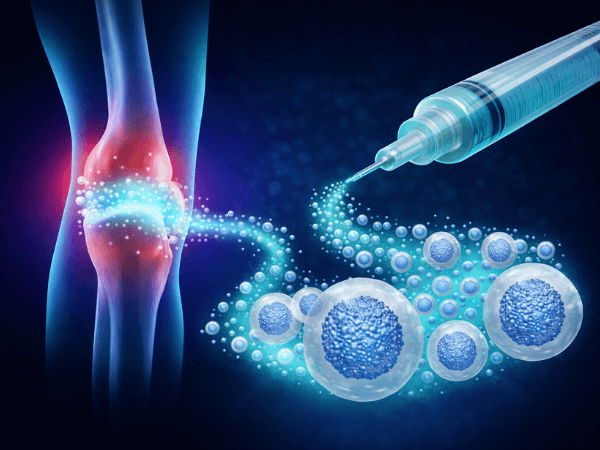
Anwendung der Stammzelltherapie im Knie bei Arthrose in München.

Overview of the Therapy:

  • Hospital stay: not required, performed on an outpatient basis
  • Duration of treatment: usually less than one hour
  • Side effects: temporary local symptoms such as mild pulling sensations, pressure, or bruising at the harvesting and injection sites may occur
  • Number of treatments: usually a single treatment, depending on the individual indication
  • Sick leave: generally not required for predominantly sedentary work
  • Crutches: usually not necessary
  • Physical activity: light activities are possible after a few days; more intense physical strain should be individually coordinated

Aftercare & Rehabilitation

After the minor fat harvesting procedure and injection of the stem cells, you may use the treated joint as part of your normal daily activities. Only more strenuous loading should be avoided for approximately four weeks.

About one year later, we assess the outcome with an MRI follow-up examination in our practice. There are, for example, cases in which cartilage has shown signs of regeneration in the presence of cartilage defects.

Scientific Classification of the Treatment

PD Dr. Berthold has many years of clinical and scientific experience in the field of cell-based therapies. Key insights stem from his research at UConn Health in Farmington, CT, USA. There, autologous cell populations derived from adipose tissue, bone marrow, and bursal tissue were investigated, with a particular focus on their ability to modulate inflammatory processes and support the healing of tendons and cartilage.

At present, stem cell therapy—for example in the treatment of knee pain—is still considered an experimental procedure. The available body of scientific evidence is heterogeneous and does not allow for generalized conclusions regarding efficacy. In clinical practice, patients report improved load-bearing capacity and a reduction in symptoms following treatment. Some patients report not only increased physical resilience, but are also able to walk, run, or hike pain-free again after the therapy.

Stem Cell Therapy for Osteoarthritis & More: Your Benefits at OrthoCenter Munich

At OrthoCenter Munich, responsible, evidence-based, and legally compliant counseling on stem cell therapy for osteoarthritis and knee conditions is a top priority. Cell-based therapies are used exclusively following careful patient selection, transparent medical counseling, and within the framework of an individual medical treatment attempt.

If you would like to learn more about the possibilities, experiences, and costs of stem cell therapy, we would be happy to advise you personally at our private orthopedic practice in Munich.

What to Expect:

  • Longstanding experience: PD Dr. Berthold is a board-certified specialist in orthopedics and trauma surgery with a focus on sports medicine and traumatology. He has conducted extensive research in the field of stem cell therapy and has been particularly active in the United States. You can find his publications here.
  • International reputation: Patients from abroad regularly come to us to receive treatment from PD Dr. Berthold at our modern private practice.
  • Broad range of services: We combine innovative stem cell therapy with precise arthroscopic surgery.

If you would like to assess whether stem cell therapy may be suitable for pain reduction in your case, we would be happy to advise you personally.
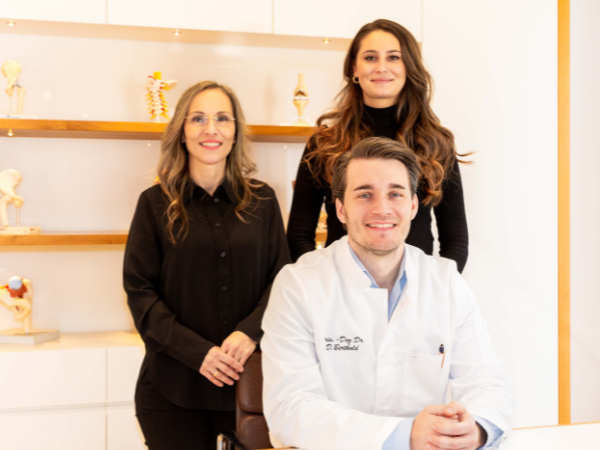
Dr. Berthold mit einem Teil seines Teams.

Your specialist for modern conservative orthopedics in Munich.

PD Dr. med. Daniel P. Berthold

  • Board-certified specialist in orthopedics and trauma surgery with international training at TUM, LMU, and the University of Connecticut.
  • Over 100 scientific publications and award-winning research.
  • Focus on non-surgical treatment using modern, outcome-oriented methods for targeted relief of symptoms.
  • Modern conservative therapies such as PRP, hyaluronic acid, and stem cell procedures.
  • Regenerative medicine to promote natural healing processes, including orthobiology and biological combination therapies.
  • Individually tailored treatment plans focused on pain reduction, improved function, and a faster return to everyday life and sports.

Frequently Asked Questions About Stem Cell Therapy, Osteoarthritis & More

What does stem cell therapy for osteoarthritis and other joint conditions cost?

The cost of stem cell therapy for osteoarthritis, knee complaints, or other orthopedic conditions depends on the individual medical effort, the region being treated, and the selected procedure. As a rule, the cost of stem cell treatment ranges between 2,000 and 3,000 euros. You will be happy to receive an individual cost estimate during a personal consultation.

Is stem cell therapy covered by health insurance?

For patients covered by statutory health insurance, stem cell therapy for osteoarthritis is generally not reimbursed, as it is not considered an established standard treatment. Private health insurance providers assess reimbursement on a case-by-case basis. In some instances, parts of the treatment costs may be covered; however, stem cell therapy often remains a self-pay service.

A blanket guarantee of cost coverage is not possible. Upon request, we are happy to provide medical documentation that you may submit to your insurance provider. Communication with the health insurance company, however, remains your responsibility.

How long does the effect of stem cell therapy last?

This cannot be predicted. Some patients report initial changes within a few weeks, while in others the effect appears later or not at all. The duration of potential positive effects depends, among other factors, on the stage of osteoarthritis, the mechanical load on the joint, comorbidities, and accompanying measures such as physiotherapy.

Some patients report an improvement in symptoms lasting several months, and in individual cases even for a longer period. According to the current state of scientific knowledge, permanent healing of osteoarthritis or complete cartilage regeneration is not possible with stem cell therapy.

What is the most effective treatment for osteoarthritis?

There is no single “most effective treatment” for osteoarthritis. Osteoarthritis is a chronic degenerative joint disease in which cartilage loss cannot be reversed according to the current state of scientific knowledge. The most effective approach to treating osteoarthritis therefore consists of an individually tailored overall concept that both relieves symptoms and slows disease progression as much as possible.

Key components of modern osteoarthritis management include targeted exercise, strength and muscle training, weight reduction in cases of overload, physiotherapy, appropriately adjusted pain management, and, where indicated, joint-preserving injection therapies. In advanced stages, joint replacement surgery can restore joint function and provide long-term pain relief.

As a recognized osteoarthritis expert, PD Dr. med. Daniel Berthold will be happy to advise you on which conservative and joint-preserving measures are appropriate in your individual case. Many patients benefit from targeted strategies and practical therapeutic approaches that can significantly improve osteoarthritis symptoms without surgery or help delay the need for an operation.

In selected patients with early to moderate stages of osteoarthritis, stem cell therapy may be considered as an adjunctive treatment attempt. In certain cases, it may help reduce symptoms and delay surgery; however, it does not replace necessary joint replacement in the presence of advanced joint destruction.

Who may benefit from stem cell therapy for osteoarthritis – and who may not?

Stem cell therapy may be considered for selected patients with early to moderate osteoarthritis when conservative measures such as physiotherapy, exercise programs, pain medication, or conventional injection therapies have not been sufficiently effective. A prerequisite is largely preserved joint mechanics without significant malalignment or severe joint destruction.

Stem cell therapy is less suitable for advanced osteoarthritis with pronounced cartilage loss, marked axial deformities, or unstable joint conditions. In such cases, cell-based procedures cannot reverse structural damage, and surgical treatment options may represent the more appropriate long-term solution. An individual orthopedic assessment is therefore essential.

What are the risks and side effects of stem cell therapy?

When performed carefully and using autologous tissue, stem cell therapy is generally considered to be well tolerated. Nevertheless, it is not a risk-free treatment. Possible side effects mainly arise from the harvesting of adipose tissue and the injection procedure and may include local pain, bruising, swelling, or temporary inflammatory reactions. Infections are rare but fundamentally possible.

In addition, it must be considered that the desired effect may not occur. Stem cell therapy cannot guarantee therapeutic success and does not replace necessary surgical procedures. Thorough medical counseling regarding risks, limitations, and uncertainties is therefore an integral part of the treatment.

How does stem cell therapy differ from PRP or hyaluronic acid?

PRP treatments, hyaluronic acid injections, and stem cell therapy pursue different therapeutic approaches. PRP is based on the injection of growth factors derived from blood platelets and primarily aims at short-term modulation of healing and inflammatory processes. Hyaluronic acid acts mainly biomechanically by improving joint lubrication and gliding ability.

Stem cell therapy, by contrast, uses cell-rich fractions obtained from the patient’s own tissue, which contain not only progenitor cells but also immunomodulatory components. The goal is a more comprehensive influence on the joint’s biological environment. None of these procedures can cure osteoarthritis. Which therapy is appropriate in an individual case depends on the stage of the disease, the symptoms, and the patient’s individual goals.

How does the consultation process before stem cell therapy work?

Before stem cell therapy, a thorough orthopedic examination is always performed, including an assessment of symptoms, imaging findings, and the functional condition of the affected joint. Based on this evaluation, it is determined whether a cell-based treatment attempt appears medically appropriate or whether other conservative or surgical measures should be preferred.

PD Dr. med. Daniel Berthold places great importance on transparent and realistic counseling. Together with you, the potential benefits, risks, alternatives, and legal framework are discussed so that you can make an informed and responsible treatment decision.

Can osteoarthritis be cured?

According to current medical and scientific knowledge, osteoarthritis cannot be cured. Osteoarthritis is a chronic degenerative joint disease characterized by progressive loss of articular cartilage as well as changes to the bone, joint capsule, and surrounding structures. This structural damage cannot currently be reversed.

However, this does not mean that osteoarthritis is untreatable. The goal of modern osteoarthritis management is to relieve pain, improve joint function, and slow the progression of the disease as much as possible. With an individually tailored treatment concept, many patients are able to maintain a good quality of life over a long period of time, in some cases even without surgical intervention.

Effective measures include targeted exercise and muscle strengthening, weight reduction in cases of overload, physiotherapy, pain medication, and joint-preserving injection therapies. Regenerative approaches such as stem cell therapy are also being investigated in selected patients with early to moderate stages of osteoarthritis; however, they cannot cure osteoarthritis and may at best alleviate symptoms and enable functional improvements.

UNSERE MITGLIEDSCHAFTEN

Unsere Fachärzte für Orthopädie sind Mitglieder in den folgenden Gesellschaften und Organisationen. Ziel dieser Gesellschaften ist eine optimale Vernetzung der Fachärzte und der Wissenstransfer – so halten wir unser Know-How stets auf dem neuesten Stand.

Gesellschaften & Organisationen

UNSERE MITGLIED-
SCHAFTEN

Unsere Fachärzte für Orthopädie sind Mitglieder in den folgenden Gesellschaften und Organisationen. Ziel dieser Gesellschaften ist eine optimale Vernetzung der Fachärzte und der Wissenstransfer – so halten wir unser Know-How stets auf dem neuesten Stand.